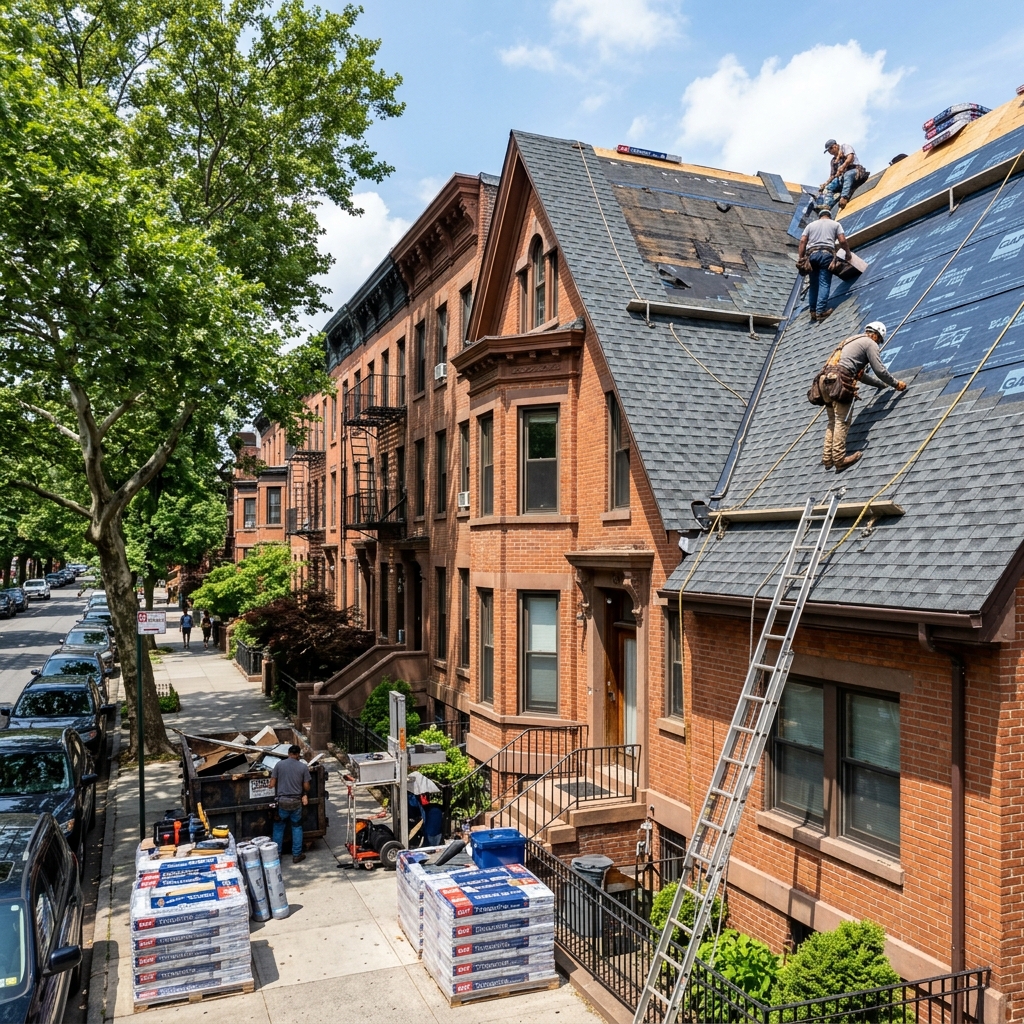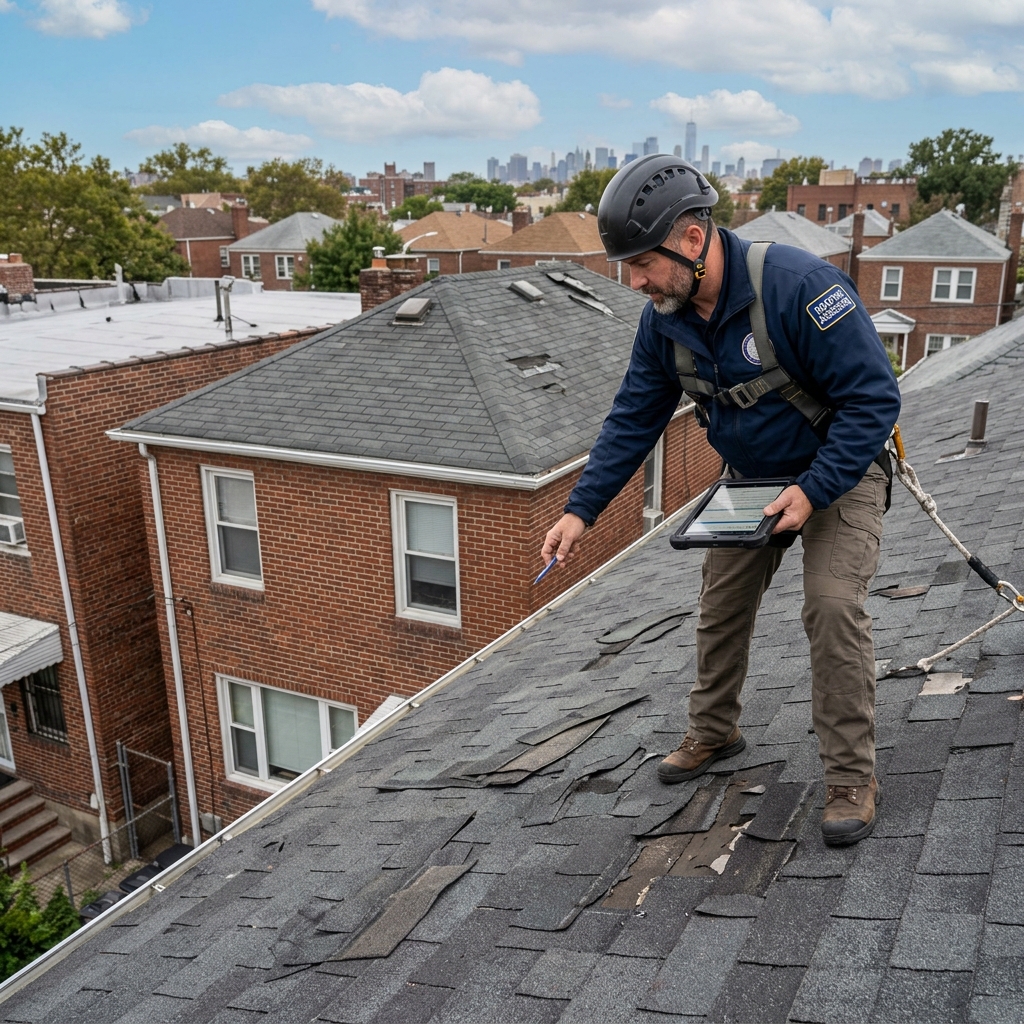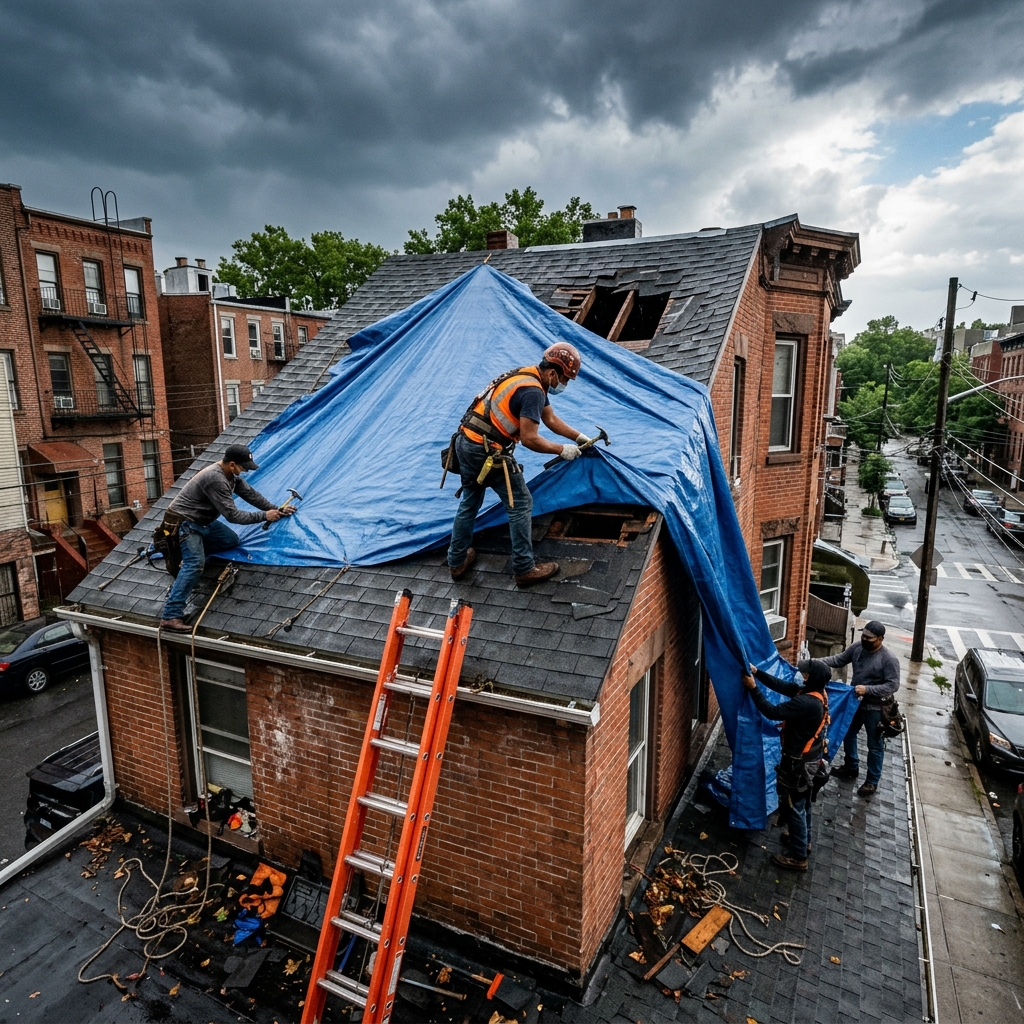

Downtown Brooklyn is a vibrant, rapidly developing hub combining historic civic buildings, high-end residential skyscrapers, and sprawling commercial centers. Roofing in this dense urban core is vastly different from working in suburban neighborhoods. Finding specialized roofing services near Downtown Brooklyn means finding a contractor who understands high-rise logistics, NYC building codes, and advanced flat roofing systems.
Roofing projects in Downtown Brooklyn require contractors with extensive experience in urban logistics, including crane permitting, tight access staging, and specialized commercial roofing systems like EPDM and fluid-applied membranes.
The Challenge of Urban Logistics
Replacing a roof on a standalone home in Queens is straightforward. Replacing a roof on a 10-story mixed-use building near Fulton Street is an entirely different operation.
- Permitting and Sidewalk Sheds: Before a single shingle or roll of TPO is lifted, the roofing company in Brooklyn must navigate the NYC Department of Buildings (DOB) and Department of Transportation (DOT). This often involves erecting sidewalk sheds (scaffolding) to protect pedestrians and securing permits to temporarily block traffic lanes for crane operation.
- Material Hoisting: Because roof access is extremely restricted, materials cannot simply be carried up a ladder. Contractors must rely on heavy-duty cranes or specialized freight elevator coordination to move tons of roofing materials to the roof deck, and to haul the heavy demolition debris back down.
Specialized Commercial Roofing Systems
The vast majority of structures in Downtown Brooklyn feature flat roofs that double as mechanical platforms for massive HVAC units, elevator overruns, and increasingly, tenant amenities like roof decks and green roofs.
These roofs require specialized commercial roofing systems that can withstand heavy foot traffic and structural loads:
- Fluid-Applied Roofing: Also known as liquid roofing. Because Downtown Brooklyn roofs often have dozens of penetrations (pipes, vents, AC units), standard roll roofing is difficult to seal perfectly. A liquid-applied membrane paints on seamlessly, conforming perfectly around every complex shape to create a monolithic, watertight barrier.
- TPO and EPDM: These single-ply membranes are the standard for high-rise commercial structures. They offer excellent durability, UV resistance, and relatively quick installation.
The Importance of Routine Maintenance
For property managers overseeing buildings near Barclays Center or MetroTech, reactive roof repair is incredibly expensive and risky. A sudden leak in a commercial building can result in lawsuits from commercial tenants or massive damage to retail inventory.
Proactive roof maintenance is standard practice in Downtown Brooklyn. We recommend bi-annual service agreements where professional roofers clear internal drains, inspect parapet flashing, and re-seal pitch pockets around HVAC units before the winter snow and spring rains arrive.
If you are upgrading an older Downtown Brooklyn building to include a roof deck, ensure your roofing contractor installs "sacrificial layers" or heavy-duty protection pads under the decking frame. Pedestrian pavers and wood decking will eventually puncture standard waterproof membranes if not properly cushioned.