
A severe Brooklyn storm can turn a minor roofing vulnerability into a major crisis in minutes. High winds, torrential rain, and sudden structural impacts demand an immediate response. If water is actively entering your home, you don't have time to wait. Here's a complete guide on how to handle an emergency roof repair after a storm in Brooklyn.
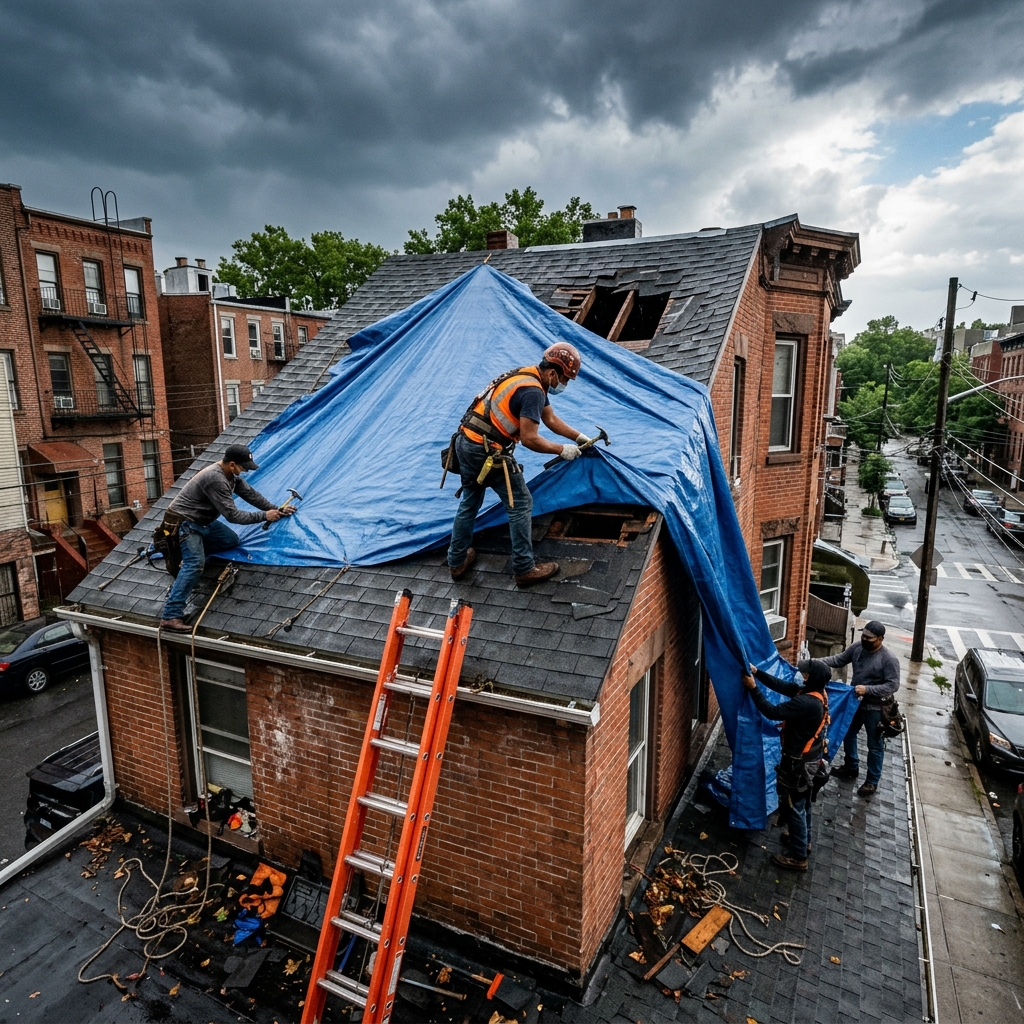
Safety is your first priority. Never climb onto a wet, storm-damaged roof yourself. A professional emergency roofing crew will immediately tarp and secure the damaged area to prevent interior water damage while you wait for a permanent repair assessment.
Immediate Steps to Take During a Roof Emergency
When you discover a massive leak or hear the terrifying sound of a tree branch crashing into your roof, your immediate actions dictate how much secondary water damage your home will suffer.
- Protect the Interior: Move furniture, electronics, and valuables away from the leak. Place large buckets or heavy-duty trash cans directly under the dripping water. Lay down thick towels or plastic sheeting to protect hardwood floors.
- Relieve Ceiling Pressure: If you see a large water bulge forming in your drywall ceiling, it's going to collapse. Take a screwdriver or an awl and carefully poke a small hole in the center of the bulge. This allows the trapped water to drain predictably into a bucket, saving the entire ceiling panel from coming down.
- Call an Emergency Roofer: Dial a local Brooklyn roofing company that offers true 24/7 emergency roof repair. Ensure they have the capacity to dispatch a crew for emergency tarping immediately.
The Importance of Professional Tarping
The immediate goal of an emergency roofing call is not to permanently fix the roof—it is to stop the bleeding. In the middle of a Nor'easter or a heavy downpour, it is unsafe and impossible to install new shingles or apply a proper flat roof membrane.
Instead, a professional crew will arrive with heavy-duty, UV-resistant tarps. They will stretch the tarp over the compromised section, wrapping it securely over the ridgeline, and battening it down with wood strips. This "dry-in" process makes your home temporarily watertight, giving you breathing room to deal with insurance and plan a permanent roof repair when the weather clears.
Navigating the Insurance Claim
Emergency roof repairs are almost always covered by your homeowner's insurance if they result from a sudden, accidental event like a storm.
Most insurance policies actually require you to take "reasonable steps to prevent further damage"—meaning they expect you to pay for emergency tarping and will reimburse you for it. If you let water pour into your house for three days without trying to mitigate it, the insurance adjuster may deny coverage for the interior drywall and flooring.
Make sure your roofer meticulously documents the damage with photos before they install the emergency tarp. This provides undeniable proof for your insurance claim.
Common Types of Storm Damage in Brooklyn
Different storms inflict different types of damage on Brooklyn properties:
- High Winds: Often tear off asphalt shingles or lift flat roofing membranes at the parapet walls. This is highly common in coastal Brooklyn neighborhoods like Coney Island or Bay Ridge.
- Heavy Rain: Overwhelms clogged internal drains on brownstones, leading to massive ponding and sudden leaks through the ceiling.
- Tree Impact: Falling limbs fracture rafters, puncture the roof decking, and destroy the roofing material simultaneously. This requires significant structural repair before new roofing can be installed.
Keep the contact information of a trusted emergency roofing contractor saved in your phone before a storm hits. When a massive storm knocks out power and floods homes across Brooklyn, reliable roofers will be booked solid within hours. Being the first to call guarantees you get immediate service.